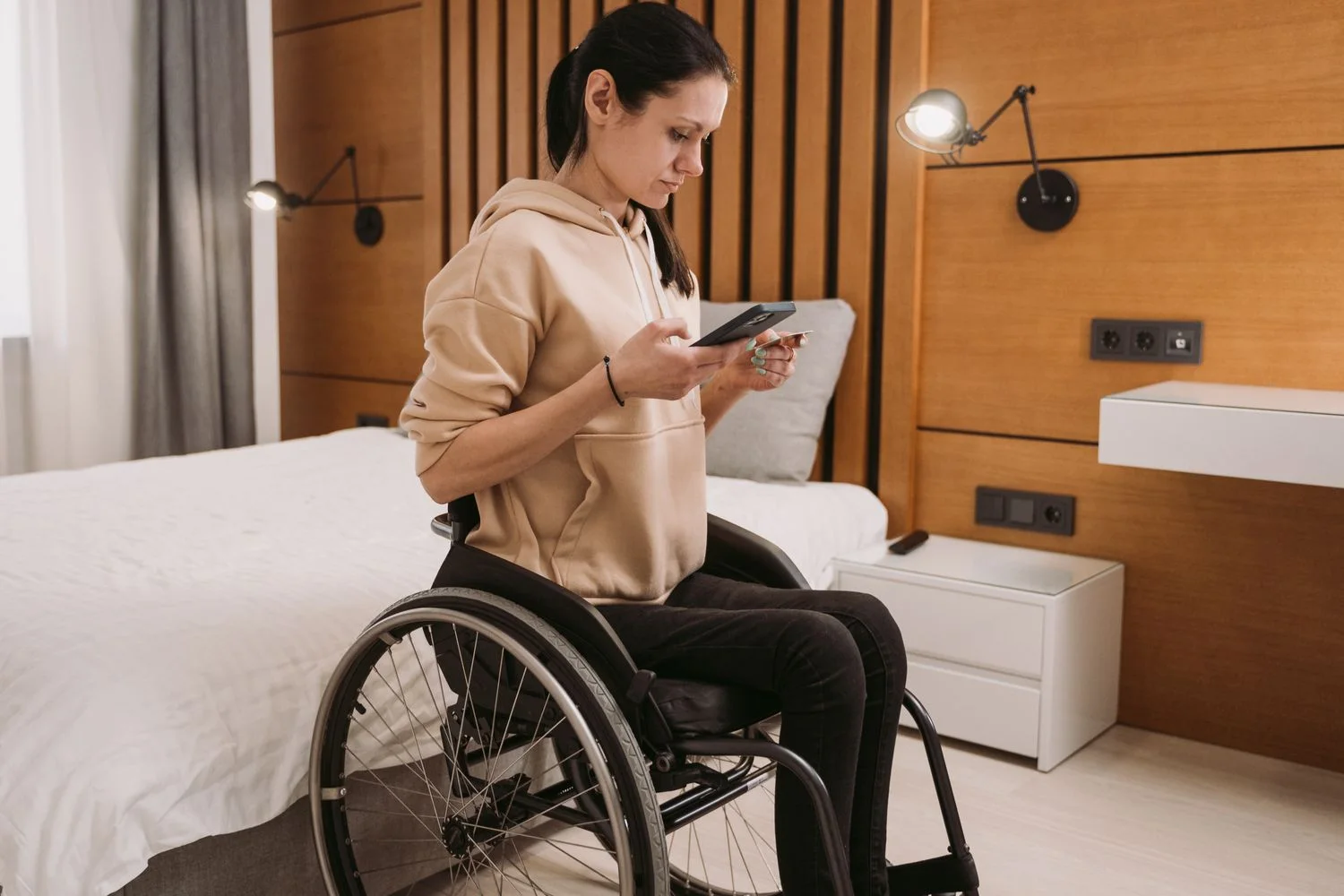
An accommodation property may work well for one traveller while presenting serious obstacles for another. A general accessibility label cannot describe your individual situation. What matters is whether the entrance, room, bathroom and connecting routes meet your needs. A short list of essential requirements is a more useful starting point than a collection of broadly positive reviews.
Start with your own requirements
Write down which conditions are essential and where assistance would be useful. For a wheelchair, this includes its actual width and the space you need to manoeuvre. With a walking frame, thresholds, heavy doors and a lack of seating may matter more. Sight or hearing impairments call for different information, such as lighting, navigation and communication with reception.
No single measurement will suit every traveller. If helpful, measure a familiar arrangement at home and explain what needs to work. Someone transferring sideways onto a bed requires a different layout from a person who can walk a short distance. Discuss specific assistance from a companion rather than treating their presence as a general substitute for suitable access.
Follow the complete route inside
Start outside the building. How does the route from the parking space or bus stop reach the entrance? Ask about surfaces, slopes and steps. A level side entrance only helps if it is open when you arrive or can be used independently. A heavy garden gate may also be relevant along the way.
Inside, check the clear opening width of doors and the space available in front of them. For a lift, the doorway and cabin dimensions are separate pieces of information. Establish whether all the rooms you need are on the same floor. An accessible bedroom does not by itself tell you whether you can reach the breakfast room, terrace or kitchen.
Request details of the bathroom and bed
Ask for current photographs of the actual room being offered, ideally from several angles. An attractive wide-angle picture may not reveal the space beside the bed or in front of the toilet. Request missing measurements: bed height, clear space on the side you need, thresholds and the arrangement of the shower, basin and toilet.
If you require grab rails or a shower seat, establish exactly what is provided and where it is positioned. Check whether a mentioned aid is permanently available or needs a separate reservation. Your own established requirements remain the reference for transfers and equipment use; a property description cannot replace an individual assessment.
Match the confirmation to the room
Detailed assessment reports, such as those available through Reisen für Alle, provide a better basis than a symbol alone. Read which areas were assessed and which room the information covers. A report for a restaurant does not confirm the suitability of every guest bedroom. Note the assessment date and ask about subsequent changes.
Have the required room category or number and essential features confirmed in writing. Keep that response with your booking. Shortly before travelling, check that the agreed entrance is available and, where relevant, that the lift is operating. Also plan an appropriate route to the beach or intended attraction: suitable accommodation does not automatically make the surrounding destination accessible.