A full suitcase strapped to a rack changes a coastal ride more than an extra sightseeing stop does. Starting, balancing on narrow paths and dealing with crosswinds all feel different on a loaded bicycle. If cycling is only part of your holiday, first decide whether changing accommodation every day is necessary.
A fixed base can remove much of the load
When you return to the same accommodation, spare clothing, large toiletries and food supplies stay in the room. Carry what the day actually requires: water, food, weather protection, a phone, a lock and suitable repair equipment. Several shorter circular rides can be more enjoyable than a continuous touring itinerary. Familiar surroundings also make it easier to shorten an outing when the wind strengthens.
On a trip between two bases, separate the transfer from the leisure ride. Your entire luggage collection need not accompany a detour to a pier. Ask whether bags can be stored securely before check-in or after departure. Permission to leave suitcases does not necessarily include a loaded bicycle, so describe what you intend to store.
Try the loaded bicycle before travelling
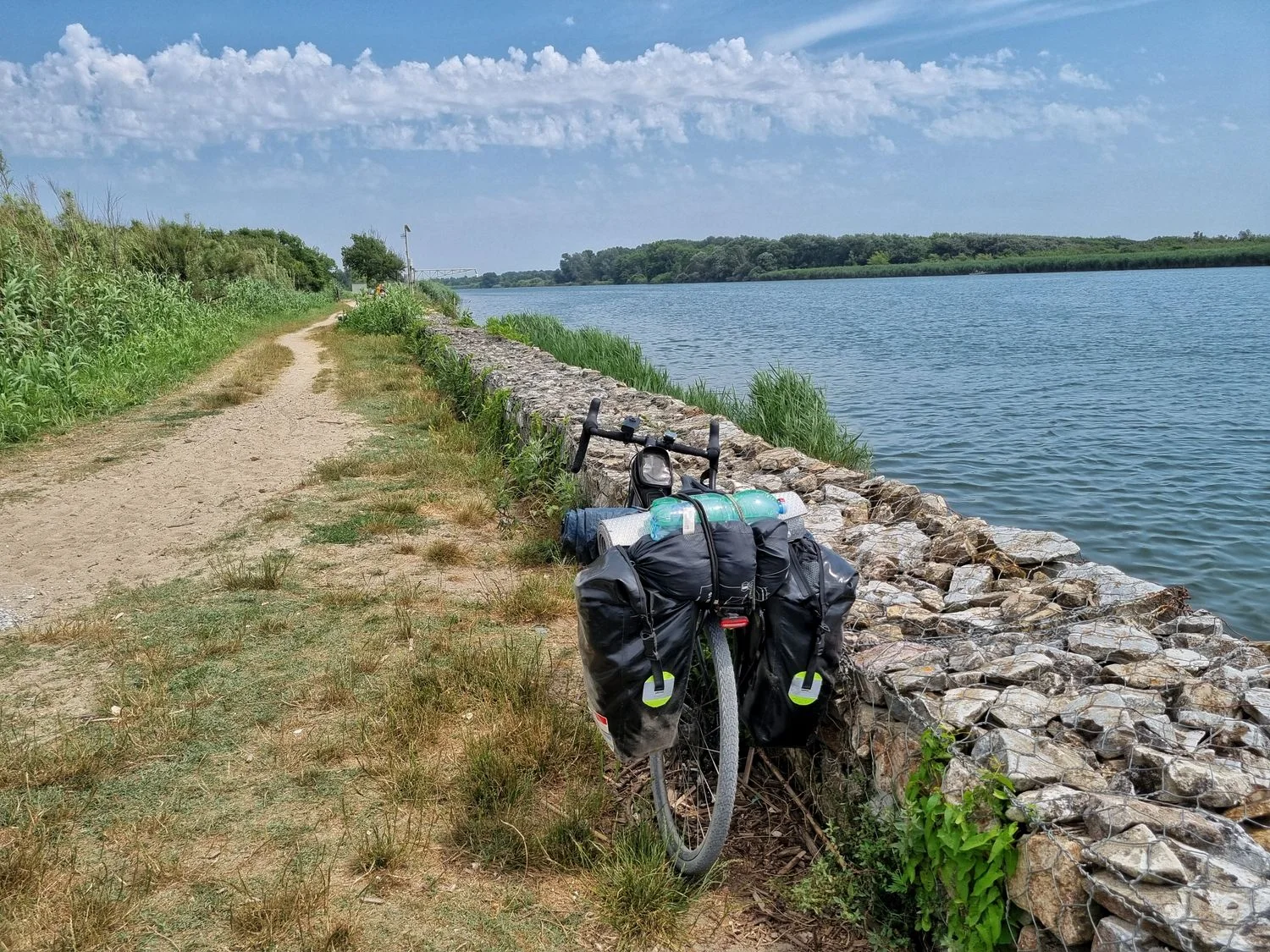
Pack the panniers fully and ride a short circuit on familiar roads. Check whether your heels strike the bags, the mounting points remain secure, and lights and brakes are unobstructed. The permitted loads for the bicycle, rack and bags must suit the complete arrangement. Use the manufacturers' specifications rather than an estimate based on how sturdy the equipment looks.
Secure heavier items low down in suitable bags and balance the load between sides. A loose jacket under a strap can reach moving parts. Keep rain protection accessible without emptying everything beside the road. Give documents their own waterproof pouch and a consistent location. This makes a stop in wind and drizzle much less awkward.
A train is not unlimited luggage capacity
If rail travel forms part of the route, check bicycle carriage and the necessary tickets for the particular service. Deutsche Bahn distinguishes long-distance arrangements from regional rules; a passenger ticket alone does not settle the bicycle question. Think through boarding as well. Easily removable panniers help with handling, but several heavy pieces can still make a short connection difficult.
A luggage transfer service may offer another option where a suitable service actually operates. Confirm collection and delivery times, weight limits, liability and participation by both accommodation providers before booking. Do not build the route around an unconfirmed transfer. If no firm arrangement exists, plan as though you will carry the bags yourself. Reducing the daily distance is often more useful than buying another bag, and leaves room to stop without turning every afternoon into a race to the next check-in.