Birds around the lagoons are often easier to observe when your own movements become smaller. Arrive slowly, remain on an authorised path and begin at a distance. You may notice more behaviour than someone continually changing position for a closer photograph. Quiet matters for the animals as well as for visitors.
Use designated observation places
Consult the national park authority about open paths and viewing opportunities. Resting and nesting areas may have temporary or permanent restrictions. An unobstructed view of the water does not establish permission to enter the shore. Remain outside closed areas even when no birds are immediately visible.
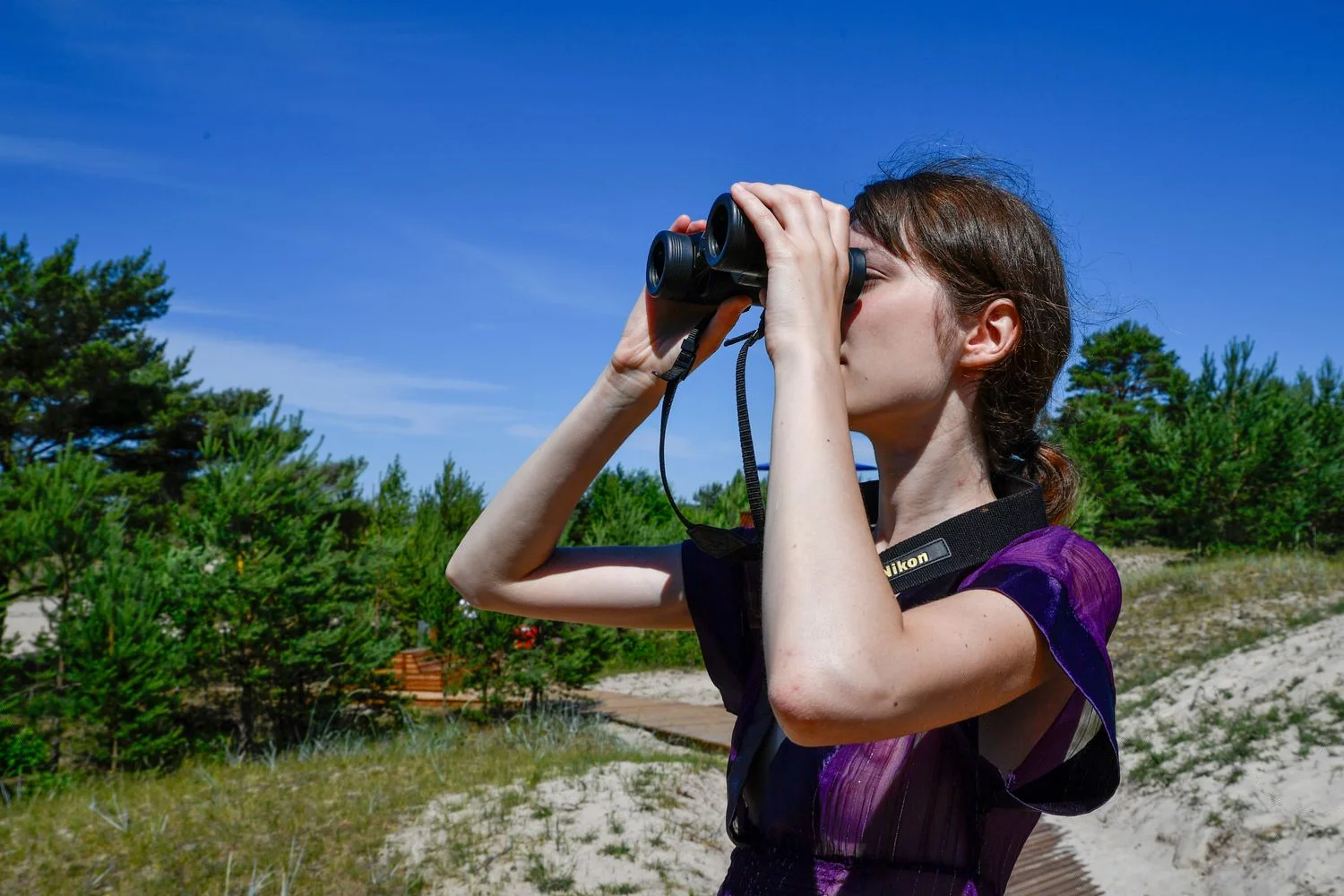
At a hide or viewing stand, leave room for other people and avoid loud conversation. Focus binoculars on a fixed feature first to establish your position. Then follow individual birds without moving towards them. A brief note about location, time and behaviour can be more interesting than accumulating the longest species list.
Treat reactions as a boundary
If birds become alert to the group, move away or take flight, your distance may be too small. Do not follow them. Increase the gap and remain quiet. The national park authority explains that even brief disturbance at resting or nesting sites can have serious consequences. Migrating birds need rest rather than repeatedly spending energy escaping visitors.
Food is not a way to bring wildlife closer. Playing bird calls or allowing a dog to roam can disturb animals too. Keep dogs on leads according to the area’s rules. Accept the available distance for photography; a short lens does not justify entering the habitat.
Plan the outing without a guaranteed sighting. Weather, water conditions and the birds themselves determine what appears. If little happens, noticing the light, movement in reeds or the wider landscape can still form part of the visit. Official guided activities provide a useful introduction when you want more interpretation. A considerate outing finishes before the group becomes restless or starts seeking ever-closer positions to force a special encounter.