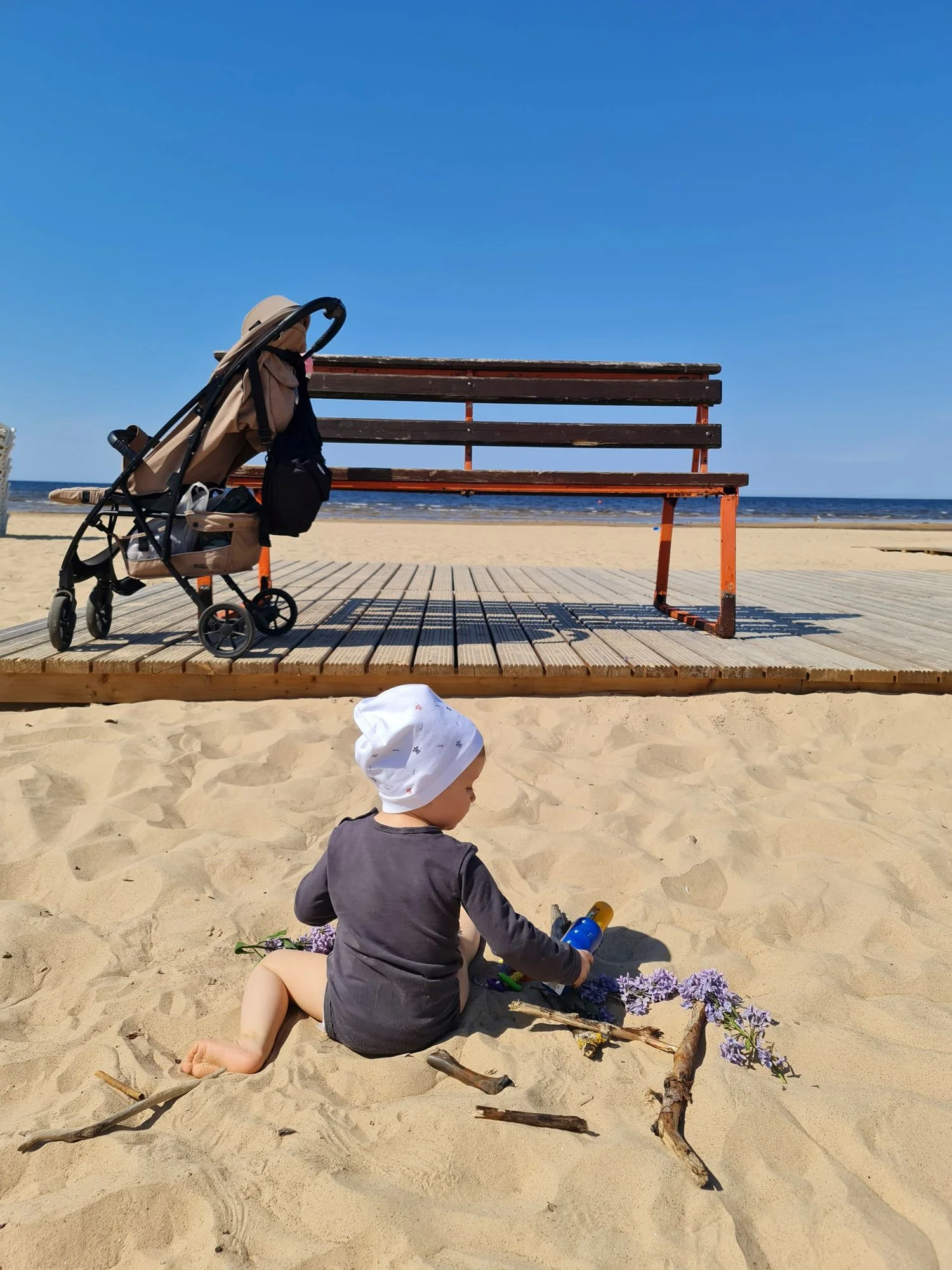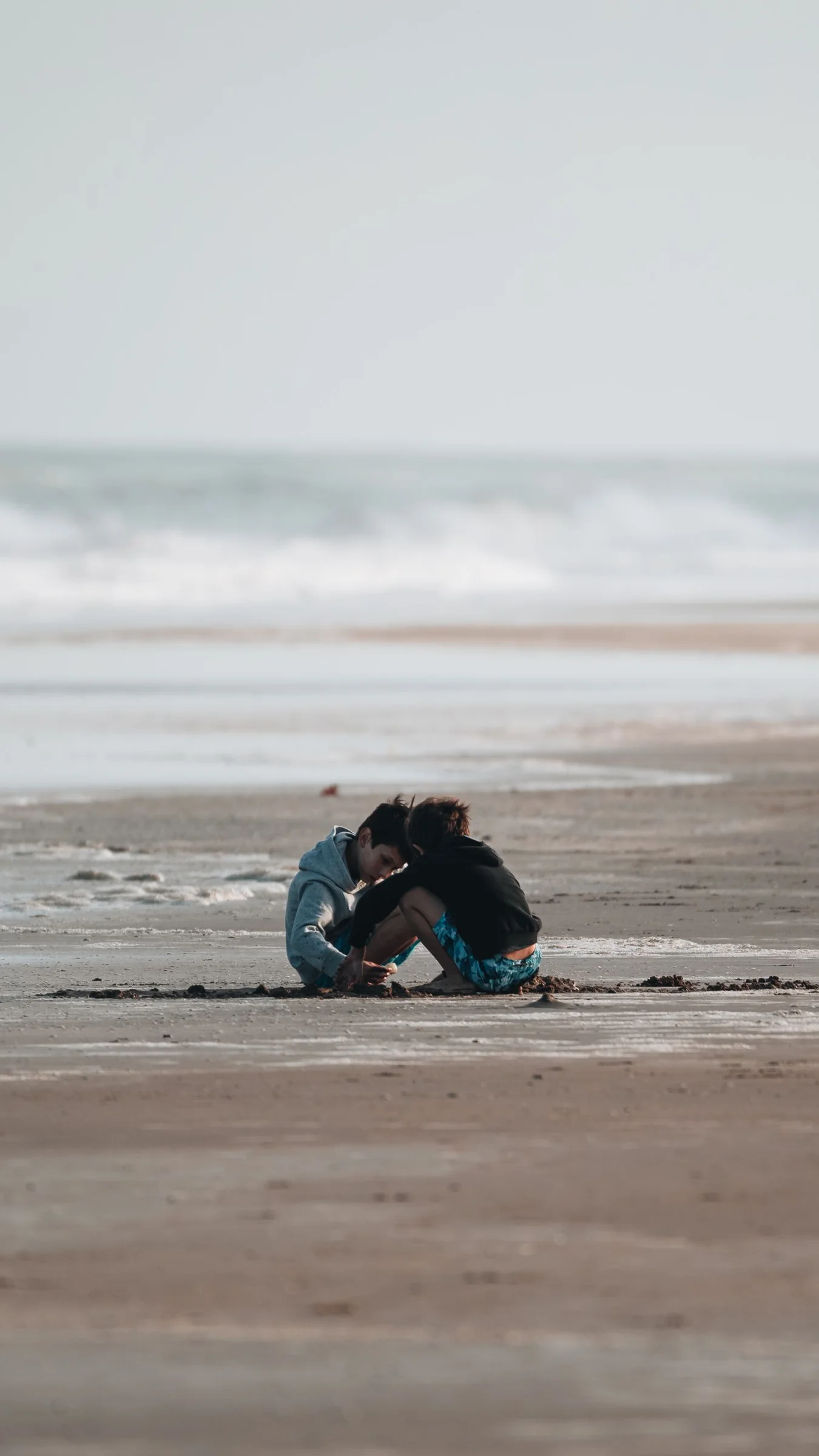
A shared beach game does not require buying new buckets, moulds or sports equipment. A small permitted area of sand and a simple idea are often enough. The game should fit the space, avoid disturbing others and finish without leaving objects behind.
Build an activity from what is already available
Draw a short line or simple shape in the sand with a finger. It can become a road for a small toy or a pattern another person adds to. If a bucket is already in the bag, compare the sizes and shapes of its impressions. There is no need to pull up plants or collect stones from protected areas.
For younger children, repeating one movement may be sufficient. Older children can suggest rules, such as taking turns to add a section. A game without a winner helps when different ages play together. Anyone who does not want to join can watch or make a separate design nearby. The activity does not need a fixed duration.
Assess the place before starting
Play in a permitted area away from rescue routes and at a distance from the water. Flat sand is not an unsupervised zone; the responsible adult remains attentive. Avoid deep holes and tunnels that could collapse or create hazards for other visitors. A small surface pattern offers plenty of possibilities.
Notice where people need to pass. A large playing area can obstruct an entrance without the group intending it. In windy weather, games without loose paper or light packaging are especially suitable. Do not use litter as play material and leave unidentified washed-up objects untouched.
At the end, a photograph of the design can provide a memory if the child wants one. Leave the area without objects or depressions that could trip others, and put everything brought from home back in the bag. The advantage is more than avoiding a purchase: the game can be reinvented on another beach without requiring more equipment each time. Exploring the idea together is the activity, rather than demonstrating how many accessories can be unpacked.