A nature walk with children does not need the largest possible species list. One question may be enough: what sounds can we hear, where does the ground change or what do leaves beside the path look like? This encourages attention without turning the outing into a test of correct answers.
Choose a short observation route
Use a permitted path with a recognisable end or turning point. In protected areas, everyone stays on designated routes and respects closures. A viewing hide may be interesting if it is open and accessible, but it does not promise particular animals at every hour of the day.
Give the group one small task before starting. Younger children might notice three different sounds; older ones can compare tracks or plant shapes using an appropriate guide. Do not taste unfamiliar plants. Animals should neither be handled nor attracted with food. Noticing something without knowing its name is a perfectly useful outcome.
Look without approaching
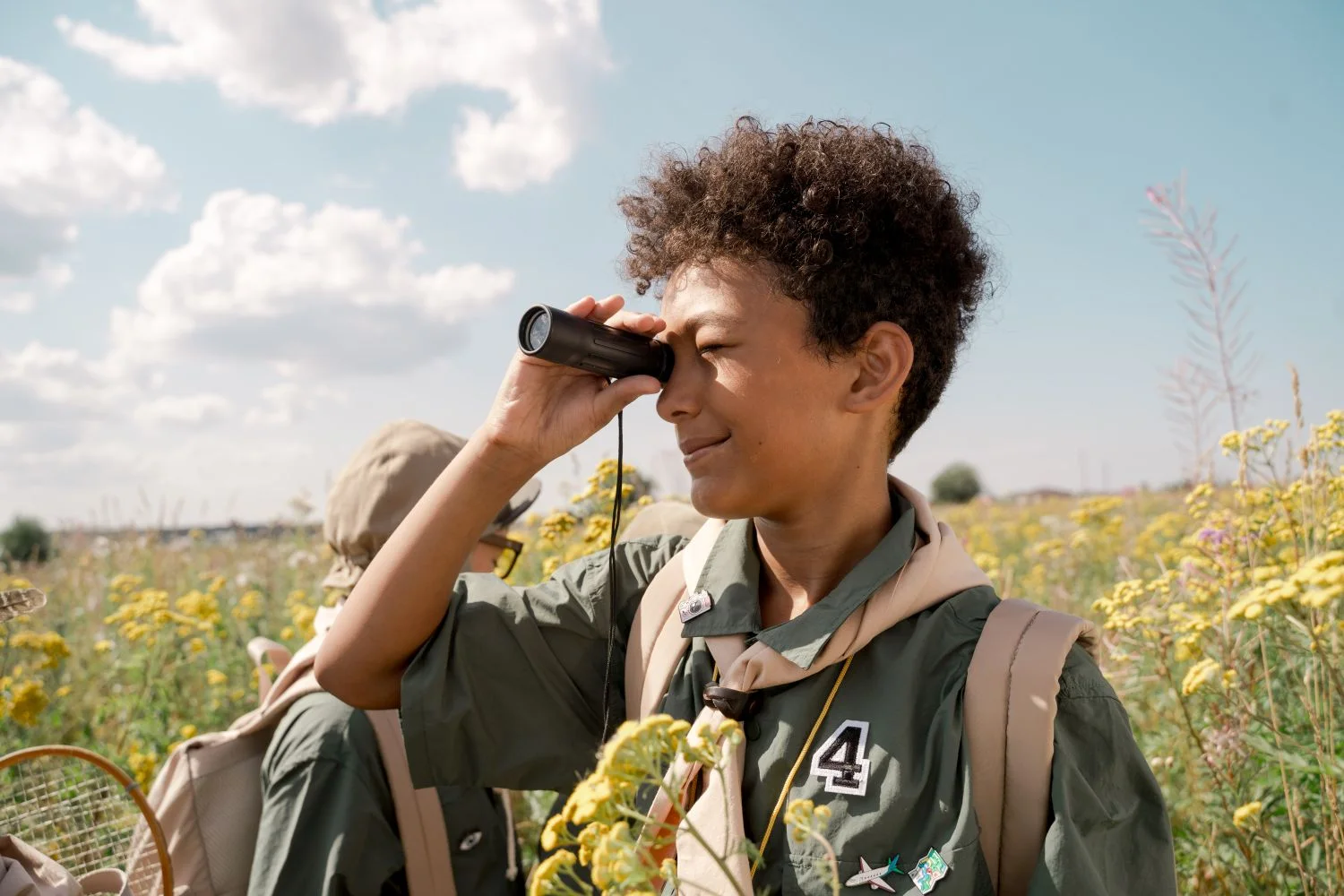
Binoculars help when their use has already been practised at home. Start with a stationary object so that finding and focusing does not have to be learned while watching an unusual bird. A lighter instrument that can be held steadily is often more useful for children than powerful magnification. Share viewing time so nobody spends the whole stop waiting.
If an animal reacts to the group, increase your distance. Quiet behaviour is especially important near resting areas. The national park authority explains that even brief disturbances can affect birds. A distant photograph is therefore preferable to a closer look that causes the animal to take flight.
At the end, everyone can describe or draw one observation. A small sketch with the place and weather records more of the experience than a bag of collected objects. Leave room for what was not seen too. Nature is unpredictable, and the walk has not failed because no particularly striking animal appeared. For deeper questions, consider an official guided nature activity later, checking its meeting point, duration and suitability for the children’s ages beforehand.